
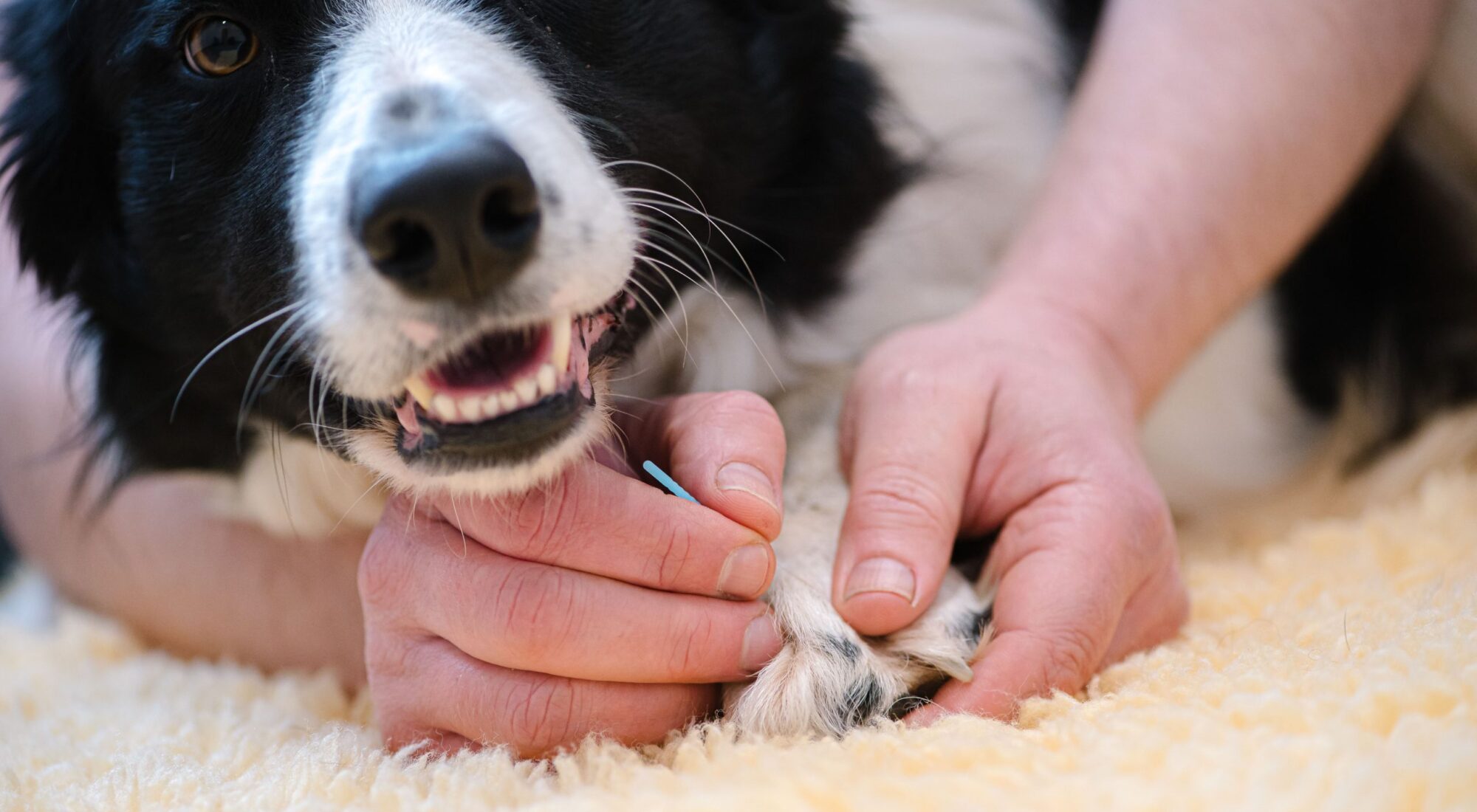
In an earlier post I described how muscle pain can add to, and sometimes drive, the discomfort of osteoarthritis. Acupuncture is one of the tools we can use to address it. It is often misunderstood, so it is worth being clear about what it can and cannot do.
Acupuncture has been suggested to help with chronic pain in three main ways.
The first is by targeting muscle trigger points. These can be identified through careful clinical examination by a veterinary surgeon, and treating them can relieve the tension and pain held in those points and help restore normal muscle function.
The second works through the body’s own chemistry. Introducing fine needles into the muscle prompts the release of endorphins, the body’s natural pain-relieving compounds, which reduce pain and encourage relaxation.
The third uses a medical electroacupuncture device, which applies a gentle high-frequency pulse between pairs of needles. This can reduce the sensitivity of nerves in the spine and help with nerve pain, which is often harder to treat with medication alone.
In the UK, acupuncture is classed as an act of veterinary surgery and may only be performed by a qualified veterinary surgeon. It is not a skill every vet is taught, though there are good courses available. I attended the four-day Western Veterinary Acupuncture Course in 2010 and have been using acupuncture and electroacupuncture in animals since then.
If acupuncture is something your own vet has suggested for your pet, you can find details of how I offer it on the Acupuncture Only service page.
All articles